


Introduction
In today’s world, STEM—Science, Technology, Engineering, and Mathematics—is no longer just for secondary school students or specialist learners. These disciplines are fast becoming essential skills for all children, starting as early as Key Stage 1. As the world around us becomes increasingly digital and technology-driven, nurturing STEM skills in primary school is critical for preparing our children for a future full of opportunity—and challenge.
So where does a STEM Club fit into this picture? Let us show you.
1. STEM is the Foundation for Future Careers
According to the UK Government’s STEM strategy, 75% of the fastest growing occupations require significant STEM skills. From medicine to architecture, renewable energy to artificial intelligence, the future workforce will demand analytical thinking, creativity, and technical know-how.
By starting early, children develop the confidence and fluency to explore these areas without fear. A weekly STEM Club session can become the first step on a path toward a fulfilling future career.
Source: UK Government STEM strategy
2. Clubs Offer a Safe Space for Curiosity
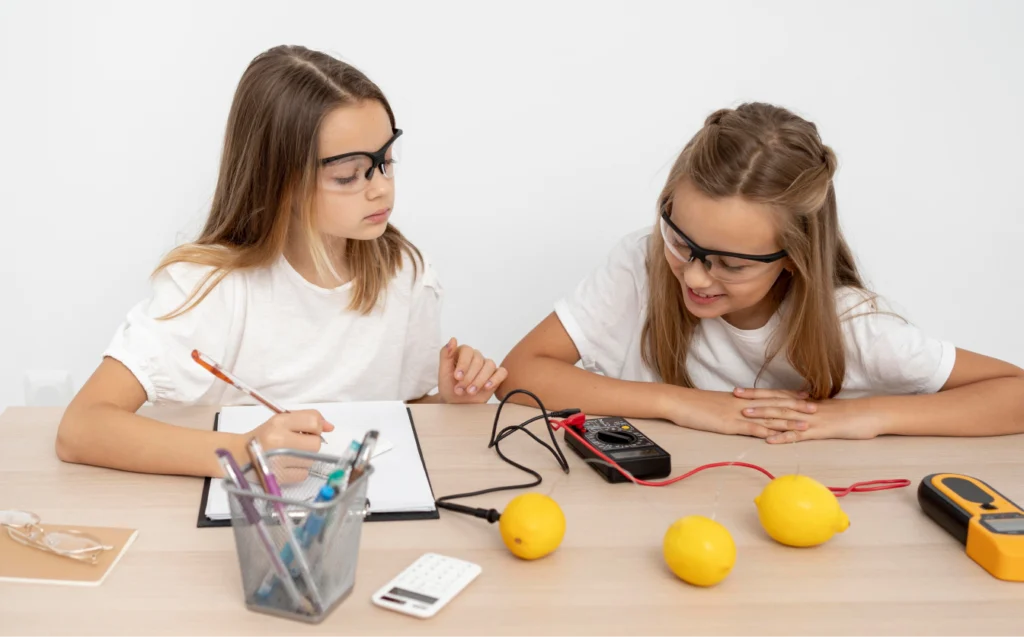
In a classroom environment, time and curriculum constraints often limit exploration. STEM Clubs change that. These after-school spaces are intentionally designed to be hands-on, relaxed, and fun—where mistakes are celebrated, and questions are encouraged.
Children get to code their first game, build a bridge out of straws, or engineer a moving robot—all without the pressure of assessments. It is learning through doing.
3. Boosts Classroom Performance Too
Many parents and teachers report improvements in classroom behaviour, focus, and enthusiasm following regular STEM Club attendance. Why? Because these sessions reinforce classroom concepts in science and maths—but through exciting, project-based challenges.
A child who builds a motorised vehicle in STEM Club is far more likely to understand friction, energy transfer, and design when revisited in the curriculum.
4. Skills That Go Beyond Academics
STEM Clubs teach more than just subject knowledge. Children learn:
- Collaboration: Group projects help children learn to work in teams.
- Problem-Solving: Projects do not always work on the first try—and that is the point.
- Resilience: Failure is reframed as feedback, not defeat.
- Creativity: Coding, designing, and building all tap into a child’s creative instincts.
These are the very skills Ofsted and the wider education community champion as part of a “well-rounded education.”
5. It’s About Equity Too
Early access to STEM is also an issue of inclusion. By offering these clubs in schools—where all children can participate regardless of background—we help close the STEM opportunity gap and ensure that every child gets the chance to discover their inner inventor.
Final Thoughts
STEM Clubs are more than just after-school activities. They are dynamic, inclusive, and forward-looking experiences that prepare children not only for school, but for life.
When schools and families invest in high-quality STEM enrichment, they are unlocking doors that lead far beyond the school gates.





Follow Us: