



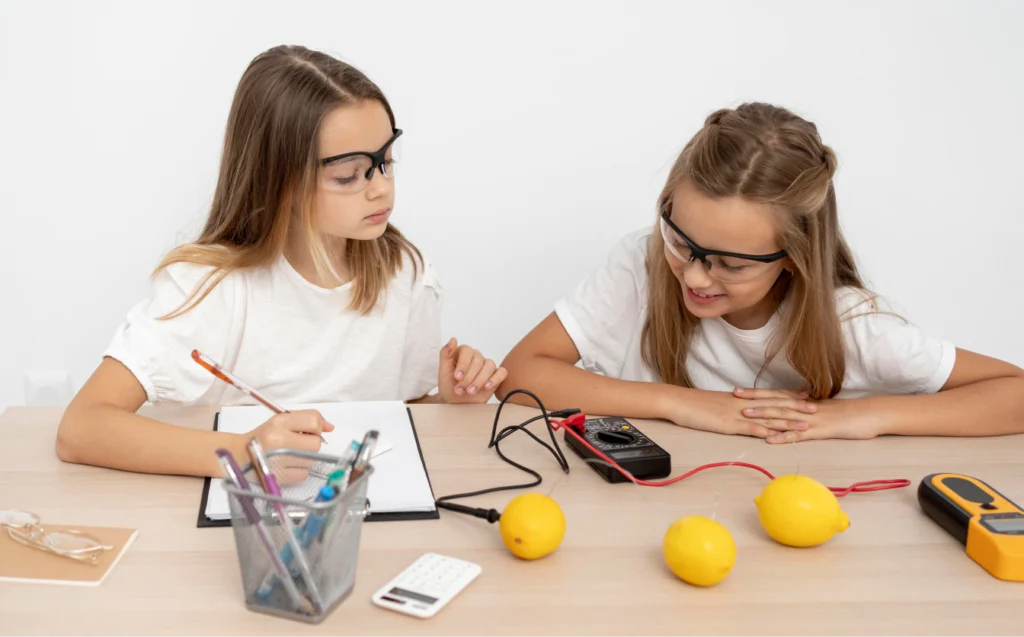
Walk into a STEM Club and you’ll see something beautiful: children playing. But look closer, and you’ll see them applying logic, solving problems, running tests, and collaborating — all while smiling from ear to ear.
This is what we mean when we say “learning through play.” And it works.
Play Makes Learning Stick
When children enjoy what they’re doing, they:
- Focus for longer
- Ask better questions
- Remember more
- Try harder
That’s not just a feeling — it’s backed by research. According to UNICEF, play is one of the most effective ways children develop lifelong learning skills.
UNICEF – Learning Through Play
What “Play” Looks Like in STEM Club
It’s not just messing about — it’s structured exploration. For example:
- Making a spaghetti tower that can hold a book
- Coding a robot pet that reacts to touch
- Creating a game where the player dodges meteors
- Experimenting to see which materials insulate best
Children are laughing, testing, building… and learning.
Play Reduces Fear of Failure
When something is framed as “play,” children are much more willing to:
- Try something new
- Take risks
- Fail — and try again
This mindset is crucial in science, technology, and life. It helps children become curious, bold thinkers — and that’s who we need for tomorrow’s world.
Fun First, Skills Second? Actually, Both at Once.
Some parents ask: “Is this just fun? Or are they really learning?”
The answer is both. In STEM Club, fun is the vehicle — but deep learning is always the destination.
Final Thoughts
STEM Club proves that serious learning does not have to feel serious. It can feel joyful. Creative. Like play.
And when children learn like that? They never forget it.



Follow Us: