


At first glance, STEM Clubs might seem like just a fun after-school option. But dig a little deeper, and you’ll find something remarkable — they are quietly boosting academic performance, confidence, and even classroom behaviour.
How? Let’s break it down.
Learning Without the Pressure
During the school day, there’s often limited room for experimentation. Teachers follow a tight curriculum, and students are conscious of tests and marks. After-school STEM Clubs create a different vibe altogether.
There are no grades. No fear of “getting it wrong.” Just children exploring, testing, failing, laughing — and learning.
This kind of stress-free learning builds deep understanding. When children build a catapult or programme a robot, they’re applying maths, science, and logic… and they remember it because it’s hands-on and exciting.
Better Focus Back in Class
You might be surprised how much what happens after school affects what happens during it. We regularly hear from teachers that:
- Students become more focused in class
- They ask better questions
- They show more persistence when tackling tricky topics
- They are more confident presenting their
It’s not magic — it’s mindset. Children learn that mistakes are part of the process, and that grit leads to results. These habits carry over into all their schoolwork.
Linking to Curriculum, Not Repeating It
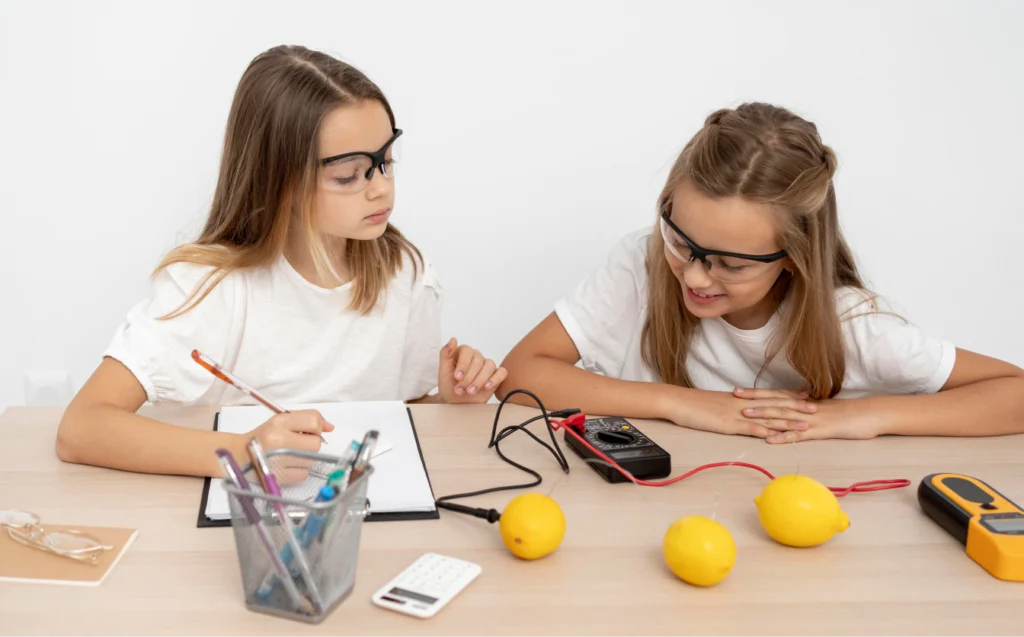
Our STEM Club sessions are carefully designed to complement the national curriculum — not repeat it. So when students do classroom lessons on energy, electricity, or coding, they already have a practical foundation from club sessions.
It’s like revision in disguise — only way more fun.
For more on how enrichment supports learning, check out this evidence base:
Education Endowment Foundation – Extended School Time
Builds Self-Belief in Learners Who Need It Most
STEM Clubs often reach students who do not think of themselves as “academic.” When they succeed in building a bridge that holds 2kg or code a working game, it shifts how they see themselves.
They start thinking:
“I can do this.”
“I am good at science.”
“I can solve problems.”
And that mindset change can be transformative.
Final Thoughts
STEM Club might just be one hour a week. But for many children, it’s the hour that changes how they feel about learning — and themselves.





Follow Us: