


“Miss, what if we could build a robot that sorts recycling?”
That was the start of a project one of our STEM Club groups dreamed up—not because it was part of the curriculum, but because they cared. And that is what makes STEM so powerful: it gives children the tools to not just learn about the world, but to improve it.
The World Needs Problem-Solvers
From climate change and plastic pollution to renewable energy and food security, the world is full of complex challenges. And while these might seem like problems for adults to solve, children are already thinking about them.
At STEM Club, we believe children should not have to wait until they are older to start making a difference. That is why we build real-world challenges into our sessions—especially ones that focus on sustainability, environmental awareness, and global impact.
Small Projects, Big Thinking
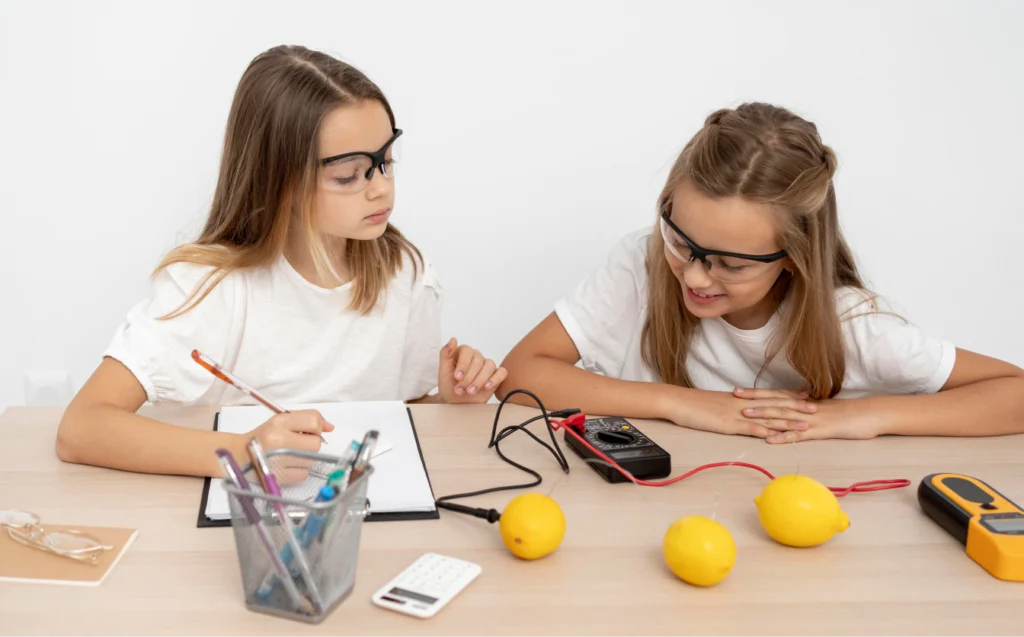
You would be amazed at how much critical thinking happens when children build a wind turbine out of recycled materials or test which shapes make the strongest bridges. They’re not just “playing” — they’re exploring real engineering questions.
In our sustainability-themed sessions, students might:
- Design a water filtration prototype using sand and charcoal
- Create a simple solar-powered circuit
- Build a “trashbot” that can detect objects
- Brainstorm inventions that reduce waste or save energy
These projects give meaning to STEM. They show children that science and technology are not abstract subjects—they’re tools to make life better.
Building Empathy Alongside Innovation
An often-overlooked part of STEM learning is empathy. When children tackle environmental or community problems, they begin to think beyond themselves. They ask:
- Who will this help?
- How can we make it more accessible?
- What else could we improve?
These are the roots of ethical innovation. And when children connect emotion to invention, their ideas become powerful.
From Awareness to Action
Learning about global issues can sometimes feel overwhelming for children. But by doing something, even on a small scale, they feel empowered.
They learn that change does not always come from big governments or scientists in labs. Sometimes, it starts with a Year 4 pupil with a cardboard box, some LEDs, and a big idea.
Teaching Sustainability Through STEM
We believe every STEM Club should include elements of sustainability. It helps students:
- Understand the interconnectedness of science and the planet
- Take ownership of their role in the future
- Develop ethical thinking, not just technical skills
Want to explore more? Check out this excellent resource from STEM Learning UK:
Sustainability in the Classroom
Final Thoughts
When children build solutions for real problems, they grow into changemakers. STEM Club is not just a space for learning—it is a space for hope, action, and future leaders.
If your school wants to inspire young innovators to care for the world around them, we would love to work together.





Follow Us: